
Digital Gold vs Physical Gold: How They Compare
TL;DR: Digital gold, whether a blockchain token or a vaulted online account, offers fractional ownership, low minimums, and near-instant buying and selling, but it puts a custodian or issuer between the investor and the metal and limits most holders to a cash exit rather than a physical one. Physical gold held directly or in an allocated account carries no counterparty once bought, but it comes with dealer premiums over spot, storage and insurance costs, and coarser divisibility. Neither format is a universal upgrade on the other. The choice comes down to whether the goal is direct possession of metal or low-cost, liquid price exposure.
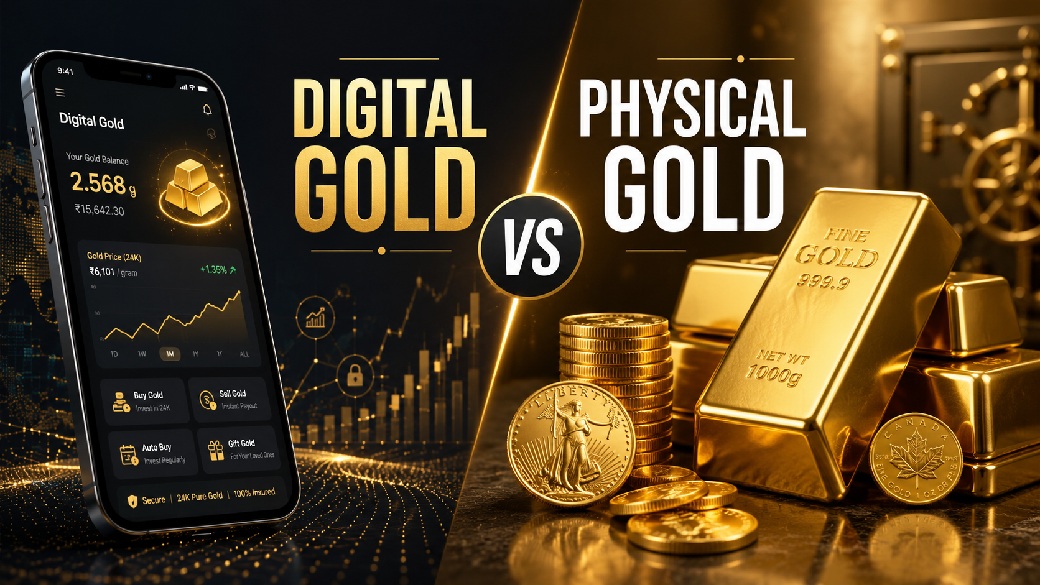
What Digital Gold and Physical Gold Actually Mean
Digital gold is an umbrella term for two products, a blockchain token backed by vaulted bullion and a vaulted online account holding allocated or pooled metal on an investor’s behalf, and both remove the day-to-day handling of coins or bars.
Physical gold means bullion coins or bars held directly, or an allocated account where specific, serial-numbered bars are set aside in an investor’s name. Both sit inside the wider field of routes into investing in gold, alongside ETFs, mining stocks, and mutual funds, which this page does not cover.
The distinction that matters most across both categories is allocated versus unallocated. The London Bullion Market Association, which sets the standards the wholesale gold market runs on, defines an allocated account as one where a customer holds title to specific bars identified by a weight list showing each bar’s serial number, fineness, and weight. Because the metal sits off the account operator’s own balance sheet, the operator holds it as a custodian rather than a debtor, and the holder carries no credit exposure to that operator if it fails. Unallocated holdings work more like a bank currency account, where the holder has a general claim on a pool of metal rather than title to specific bars, which makes that holder an unsecured creditor of the institution instead. This allocated-versus-unallocated line reappears inside digital gold products, vaulted bullion accounts, and physical dealer arrangements alike, so it is worth checking for on any product before comparing cost.
The Direct Answer: Convenience and Fractional Access Against Counterparty Risk
Digital gold wins on convenience, fractional ownership, and low minimums, while physical gold wins on direct possession and the absence of an ongoing counterparty, and the right choice depends on which of those two things an investor actually needs.
A reader who wants price exposure without arranging storage, comfortable with a custodian or issuer standing between them and the metal, is better served by a digital-gold platform. A reader whose goal is metal they can hold, with no issuer to default and no redemption threshold in the way, is better served by physical bullion in an allocated account or in hand.
Both routes track the same underlying asset, so this is a question of custody and access, not performance. Digital platforms trade a lower entry cost and instant liquidity for a layer of counterparty risk, while physical bullion trades that convenience for a real purchase premium and storage cost, in exchange for owning the metal outright.
How Digital Gold Platforms Actually Work
Digital gold splits into blockchain tokens backed by vaulted bullion and vaulted-account trading platforms, and the products that hold up best are the ones that disclose allocated backing, a named custodian, and independent audits, since those three details determine what a holder actually owns.
PAX Gold, issued by Paxos Trust Company, is a token where each unit represents one fine troy ounce of a London Good Delivery bar held in LBMA vaults, and Paxos is a trust company regulated as a custodian by the Office of the Comptroller of the Currency, with the backing gold audited monthly. Tether Gold follows a similar allocated model, with each token tied to an individually serialized bar stored in Switzerland and verified through quarterly attestations. Both can be redeemed for physical metal, but the threshold is steep. Because a London Good Delivery bar runs 350 to 430 fine troy ounces, physical redemption realistically requires holding roughly 430 tokens, the size of one full bar, plus fees and delivery limited to specific vault locations after identity verification. Most retail holders exit through a cash sale rather than physical delivery.
Vaulted-account platforms follow the same custody logic without the blockchain layer. OneGold, a joint venture between the bullion dealer APMEX and the trading firm Sprott, holds allocated, insured metal across vaults including Loomis, Brinks, and the Royal Canadian Mint, and lets a holder redeem for physical delivery, typically shipped within a business day. Vaulted holds gold in kilo bars at the Royal Canadian Mint and silver at HSBC London, both allocated to the individual holder, with a stated App Store premium of 0.8 percent on gold and 2.0 percent on silver over its wholesale acquisition price. Readers wanting the fuller field of buying apps, including the dealer-storefront and price-tracker categories these platforms sit alongside, can see the site’s guide to gold and silver apps.
BullionVault, a London platform and full member of the London Bullion Market Association, runs a live peer-to-peer order board with allocated, insured storage across several vault cities, at a commission from 0.5 percent down to 0.05 percent depending on volume traded. Across these platforms, the metal is allocated and insured, a named custodian holds it, and a balance converts to cash almost instantly, but converting it to metal in hand takes time, fees, and sometimes a high minimum.
Digital gold is not a gold exchange-traded fund. An ETF trades as a security on a stock exchange, priced by supply and demand for shares rather than a direct account balance, and most retail holders cannot redeem shares for physical metal at all. Readers wanting the fuller list of digital-gold tradeoffs are better served by the site’s dedicated breakdown of digital-gold investment schemes, which goes deeper than this page needs to.
How Physical Gold Actually Works
Physical gold means bullion coins, bullion bars, or an allocated account holding specific bars in an investor’s name, and the cost of that direct ownership shows up almost entirely in the premium paid over spot and in ongoing storage, not in a management fee.
The U.S. Mint does not sell bullion coins directly to the public. It distributes American Eagle and American Buffalo coins through Authorized Purchasers, at a wholesale premium over the benchmark gold price that scales down as coin size scales up: 3 percent on a one-ounce coin, rising to 5 percent on a half-ounce, 7 percent on a quarter-ounce, and 9 percent on a tenth-ounce, since minting cost spreads across less metal on a smaller coin. Retail buyers pay more than that wholesale figure. Dealer data puts common one-ounce gold coins and generic bars at roughly 3 to 8 percent over spot at retail, while plain generic gold bars sit closer to 1 to 2 percent, since a bar carries no numismatic or sovereign-mint premium.
At the wholesale, institutional level, a London Good Delivery bar must weigh 350 to 430 fine troy ounces, meet a minimum fineness of 995 parts per thousand, and come from an LBMA-accredited refiner, the same standard that underpins the token redemption thresholds described above.
Physical gold also carries a resale reality that is easy to underweight at purchase. Even a low-premium product can produce a round-trip loss if the buyback price sits meaningfully below what was paid. Costco’s one-ounce, 24-karat gold bars sell at roughly 2 percent over spot and are marked strictly non-refundable, and once resold, dealers have been reported paying noticeably less than spot for them, from about 5 to 10 percent below spot at most dealers to 1 to 5 percent below spot among some shops surveyed in New York. That gap applies to physical gold generally, and it is a cost digital platforms’ near-instant cash redemption does not carry the same way. Readers comparing bar and coin formats in more depth can go further with the site’s gold bars versus gold coins comparison.
Costs and Custody, Side by Side
Digital gold’s cost sits mostly in an ongoing premium or commission plus, on vaulted accounts, a storage fee, while physical gold’s cost is front-loaded into the purchase premium and then continues as storage and insurance if not kept at home.
Neither structure is inherently cheaper. It depends on the holding period and the exit path.
| Digital gold (tokens and vaulted accounts) | Physical gold (coins, bars, allocated accounts) | |
| What you hold | A token or account claim on allocated (or, for some products, pooled) vaulted metal | Coins or bars in hand, or title to specific bars in an allocated account |
| Counterparty | Issuer or platform custodian stands between holder and metal | None once purchased, if the metal is allocated or in hand |
| Typical cost | Ongoing premium or commission (roughly 0.05% to 2% seen across the platforms above), plus storage on some accounts | One-time premium over spot (roughly 1% to 8% at retail, depending on coin, bar, or bar size), plus storage and insurance if not held at home |
| Redemption | Cash exit is near-instant, physical redemption of tokens typically requires close to a full bar’s worth of holdings plus fees | Already in hand, or can be sold to a dealer, typically at a discount to spot |
| Divisibility | Highly fractional, buy and sell in small increments | Limited to the coin or bar denominations purchased |
Which One Fits a Given Investor
A reader who wants the lowest-friction, most fractional exposure to the gold price, comfortable with a regulated custodian or issuer holding the metal, is generally better served by a digital-gold platform, while a reader whose goal is a counterparty-free store of value is generally better served by allocated physical metal.
Neither answer is universal, and the two are not mutually exclusive. An investor can hold a core physical position for the counterparty-free thesis and use a digital platform for smaller, liquid exposure.
The screening questions are the same regardless of format. Is the backing allocated or pooled, and is that disclosed rather than assumed. Who is the named custodian, and is it independently audited. What does redemption actually require, in tokens, fees, and time. Always weigh this against your own plan, and consult your own financial and tax professionals before acting on it.
Frequently Asked Questions
Is digital gold as safe as physical gold? It depends what “safe” is measured against. A digital-gold product backed by allocated metal, a named regulated custodian, and independent audits carries custody protections similar in spirit to an allocated physical account, but it still depends on that issuer or platform continuing to operate and honor redemptions. Physical gold has no such ongoing counterparty, but it carries its own risks around theft, loss, and insurance that a vaulted platform is built to handle for the holder.
What is the real difference between digital gold and physical gold? Digital gold is a claim, either a blockchain token or a vaulted-account balance, on metal held by a custodian on the holder’s behalf. Physical gold is the metal itself, in hand or set aside as specific bars in an allocated account with the holder’s name on the weight list. The difference shows up in how each is bought, stored, and eventually converted back to cash or metal.
Can digital gold be redeemed for real, physical metal? For tokens like PAX Gold and Tether Gold, yes, but the threshold is steep, close to 430 tokens, the size of one full London Good Delivery bar, plus fees and delivery to specific vault locations. Vaulted-account platforms such as OneGold and Vaulted generally allow physical redemption in smaller increments, shipped for a fee. Most digital-gold holders exit through a cash sale instead.
Which costs less, digital gold or physical gold? Digital platforms here run commissions and premiums from roughly 0.05 percent up to 2 percent, sometimes with a storage fee, while physical gold carries a one-time purchase premium from about 1 percent on generic bars up to 8 percent on retail coins, plus storage and insurance if not kept at home. A short holding period favors the lower digital commission, while a long one favors whichever ongoing cost is lowest.
Is digital gold the same as a gold ETF? No. A gold exchange-traded fund is a security traded on a stock exchange, and most retail holders cannot redeem ETF shares for physical metal. Digital-gold tokens and vaulted accounts are direct claims on allocated bullion held by a named custodian, with a defined, if steep, path to physical redemption.
This article is educational and does not constitute investment, tax, or legal advice.